Product Details
Product Description
Product Description
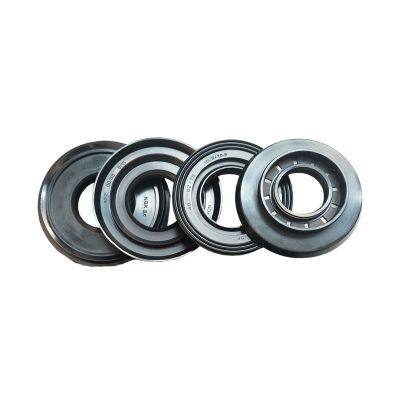
Oil seals play a vital role in preventing leaks in various types of mechanical systems. While all oil seals serve the same basic purpose—to prevent fluid leakage—there are significant differences between those designed for specialized applications like washing machines and more general-purpose oil seals. Understanding these differences can help in selecting the correct seal for specific mechanical requirements.
1. Operating Environment
The most notable difference between washing machine oil seals and regular oil seals is the operating environment. Washing machines deal with a unique combination of water, detergents, and sometimes high temperatures. Washing machine oil seals are specifically designed to withstand constant exposure to water and cleaning agents, which can break down ordinary oil seals. These seals must provide a watertight seal to prevent water from leaking into the mechanical components, ensuring the smooth operation of the washing machine.
On the other hand, regular oil seals are often designed to retain lubricants in an environment where the primary concern is oil leakage rather than water. While some general-purpose oil seals can handle a range of fluids, including water, they may not be engineered to resist the caustic effects of detergents or repeated water exposure.
2. Material Composition
Material selection is another critical difference between washing machine oil seals and regular oil seals. Washing machine seals are commonly made from specialized elastomers like nitrile rubber (NBR) or fluororubber (FKM), which have excellent resistance to water, detergent, and high temperatures. These materials also need to maintain their flexibility and sealing ability under frequent cycles of heating and cooling, common in washing machines.
Regular oil seals, by contrast, are typically made from materials like nitrile or polyurethane, which are more focused on providing resistance to oil, grease, and dust. These materials may not hold up as well in environments where water or chemical detergents are present, making them unsuitable for washing machine applications.
3. Seal Design and Structure
Washing machine oil seals often feature more complex designs, incorporating multiple sealing lips and sometimes even springs to maintain a tight seal in the fluctuating pressure and temperature conditions of a washing machine drum. The multi-lip design ensures that water is kept out of the critical components while still allowing the drum to rotate smoothly.
In comparison, regular oil seals usually have a simpler design, often with a single lip. While effective for general-purpose sealing of lubricants in environments like engines or gearboxes, these simpler seals may not offer the same level of protection against moisture and detergent penetration.
4. Durability and Lifespan
Because washing machines undergo frequent, heavy use—often running multiple times a week—the oil seals in these machines need to be especially durable. High durability ensures that washing machine seals can withstand not just mechanical wear and tear, but also chemical degradation over time. Regular oil seals may not face the same level of stress or chemical exposure and are generally designed with a longer lifespan in mind when used in more traditional applications.
5. Applications and Industry Use
While washing machine oil seals are primarily used in domestic appliances, regular oil seals have much broader applications across industries. They are used in automotive engines, gearboxes, hydraulic systems, and industrial machinery. Their general-purpose nature allows them to be applied in various fields, although they are not always suited for the highly specialized needs of washing machines.
While both washing machine oil seals and regular oil seals perform the critical function of preventing fluid leakage, their differences are substantial. Washing machine oil seals are designed to cope with water, detergents, and high-temperature environments, while regular oil seals are more focused on containing lubricants in standard mechanical systems. Understanding these distinctions is essential for ensuring the correct oil seal is used, thereby enhancing the longevity and performance of mechanical systems.
>>
25-270cubic Meters/Hour Stationary Model and Portable Concrete Mixing Plant
>>
ASTM A532 White Iron Wear Plate for Serve Abrasion and Impact Application as Chute Liner Protection
>>
different size /shape carbon fiber car parts carbon fiber car accessories
>>
ALLINGE DRD2129 New Smart 2G 3G Mobile Booster 900/1800/2100mhz Cellular Signal Amplifier Repeater
>>
2-Layer Practice Golf Ball
>>
Eco Friendly Bamboo Fibre Kids Lunch Box With Knife,fork And Spoon
>>
Woodworking Plywood Hot Press Machine Film Faced Plywood Machine
>>
Solar Lantern with FM Radio 5 Dimmable Brightness Phone Charging Function
>>
Heat Vulcanizing Conveyor Belt Press Machine
>>
Wholesale Brass Tap Basin Faucet Plating Color Brass Bibcock
>>
Rubber Non Slip Outdoor Sports Climbing Shoes for Men and Women Ex-24h8320
>>
High Speed Hard Candy/Fruit Hard Candy /Orange Hard Candy/SGS Die Forming Complete Automatically Candy Machine
>>
2800X8000mm CE/PED Approved Special Composite Autoclave/Industrial Autoclave
>>
Plastic Recycling High Quality Waste Dirty Plastic Pet Drinked Bottle Washing Dewatering Machine
>>
5180275 Hydraulic Pump for Ford/NewH olland Tractor
>>
Waterproof 12V Silicone LED Side License Plate Light Lamp Bulb LED COB Strip for Car
>>
Maishi FDA Approved 100% Nylon Filter Mesh
>>
Electrical Terminal Block for Wire Contact Mini Distribution Block Ptfix 2.5mm
>>
2025 Top Quality Powder Coating Curing Oven Manufacture Price
>>
The Best Chinese Supplier for Chrome Oxide Green All Grade!